
 EN
EN
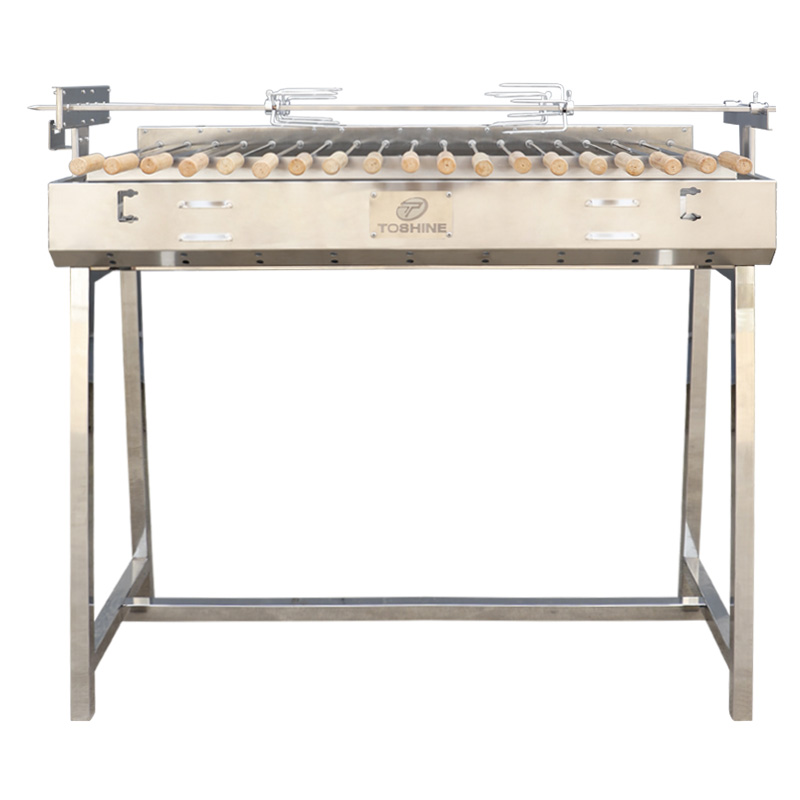
Shifting from Transactional Sales to Strategic Alignment with Distributors
Why 'First Order' Metrics Undermine Long-Term Success for BBQ Spit Roaster Manufacturers
Prioritizing initial sales volume over partnership dynamics creates fragile supplier-distributor relationships. Manufacturers fixated on short-term order metrics often neglect joint market analysis, co-developed training, and shared planning—critical trust-building activities that drive long-term alignment. Industrial distribution studies show this transactional focus correlates with 67% higher distributor churn within two years. When BBQ Spit Roaster suppliers emphasize quick wins, they compromise foundational elements like:
- Shared inventory planning for seasonal demand fluctuations
- Co-developed technical certification programs
- Transparent production capacity forecasting
Distributors facing commercial kitchen equipment failures without reliable support inevitably seek alternatives. Sustainable growth requires shifting from transactional efficiency to mutual value creation—where success is measured not by the first order, but by the durability and depth of the partnership.
Aligning Production Flexibility and After-Sales Support with Distributor Expansion Goals
Commercial kitchen distributors increasingly prioritize manufacturers who synchronize operations with their territory growth objectives. Top-performing BBQ Spit Roaster suppliers deploy modular production systems—enabling rapid configuration shifts from 200-lb stadium units to compact models for boutique hotels—so distributors can enter new segments without inventory bottlenecks. Simultaneously, embedding regional service technicians within distributor networks delivers 43% faster mean-time-to-repair (MTTR), directly supporting scalability. This operational alignment extends to:
- Mapping warranty response timelines to distributor SLA commitments
- Co-investing in demo units for key account development
- Integrating real-time equipment performance data into joint business planning
The result is a transformation: distributors evolve from transactional channels into true market expansion partners—co-owning outcomes rather than merely fulfilling orders.
Establishing Trust Through Operational Transparency and Shared Accountability
Real-Time Performance Dashboards: Enabling Joint Oversight of BBQ Spit Roaster Inventory, Service Response, and Uptime
Real-time performance dashboards serve as shared command centers—transforming how BBQ Spit Roaster suppliers and distributors manage operational partnerships. These platforms track regional inventory levels, technician response times, and equipment uptime in real time, enabling immediate, coordinated action when issues arise. For example, during a peak-hour rotisserie failure in a commercial kitchen, both parties instantly see incident severity, nearest available parts, and the dispatched technician’s ETA—eliminating delays caused by information silos or blame-shifting.
Manufacturers using such dashboards report 30% faster service resolution and 22% higher equipment availability (Food Service Tech Report 2023). The transparency fosters reciprocal accountability: distributors share more accurate demand forecasts, while suppliers proactively adjust production and replenishment. One European supplier reduced spare parts shortages by 45% after implementing dashboard-driven alerts.
| Dashboard Metric | Partnership Impact |
|---|---|
| Inventory Accuracy | Prevents overstock/stockouts across supply chain |
| Mean Repair Time | Identifies training gaps in service networks |
| Uptime % | Correlates directly with end-customer retention |
This operational symbiosis builds trust through measurable reliability—giving distributors confidence to expand reach, while giving manufacturers unfiltered field data to refine design, service, and supply chain decisions.
Co-Creating Value via Collaborative Innovation and Lifecycle Partnership Models
Modular Service Contracts: How a U.S. Distributor and Australian BBQ Spit Roaster Brand Scaled Support Responsiveness Together
Modular service contracts empower commercial kitchen partners to tailor support levels to regional demand patterns and equipment criticality. A U.S. distributor and Australian BBQ Spit Roaster manufacturer co-developed tiered coverage—platinum for high-volume restaurants, standard for seasonal venues, and remote diagnostics for remote locations. Using anonymized performance data, they built failure-prediction algorithms that reduced emergency callouts by 38% and improved first-fix rates by 52%. A shared digital dashboard tracked MTTR and part availability, enabling proactive dispatches before failures occurred. This collaborative framework transformed service from a cost center into a competitive differentiator—increasing distributor retention by 27% while lowering the manufacturer’s warranty costs.
Embedding Proactive Lifecycle Planning—From Installation to Refurbishment—in BBQ Spit Roaster Partnership Agreements
Forward-thinking partnerships now embed lifecycle management directly into supply agreements—covering commissioning, performance benchmarking, and end-of-life refurbishment. For BBQ Spit Roasters, this includes mandatory joint inspections at installation, 6-month performance reviews, and predefined refurbishment pathways after 5,000 operational hours. Manufacturers supply corrosion-resistant upgrade kits aligned with regional climate challenges; distributors contribute local usage pattern data to optimize maintenance schedules. Key components include:
- Preventive maintenance calendars, synchronized with seasonal demand cycles
- Component refresh protocols, driven by motor load analytics
- End-of-life buyback guarantees, with remanufacturing credits
This cradle-to-cradle approach reduces unexpected downtime by 41% and extends equipment lifespan by 60%, generating shared savings that fund co-innovation—turning lifecycle stewardship into a strategic advantage.
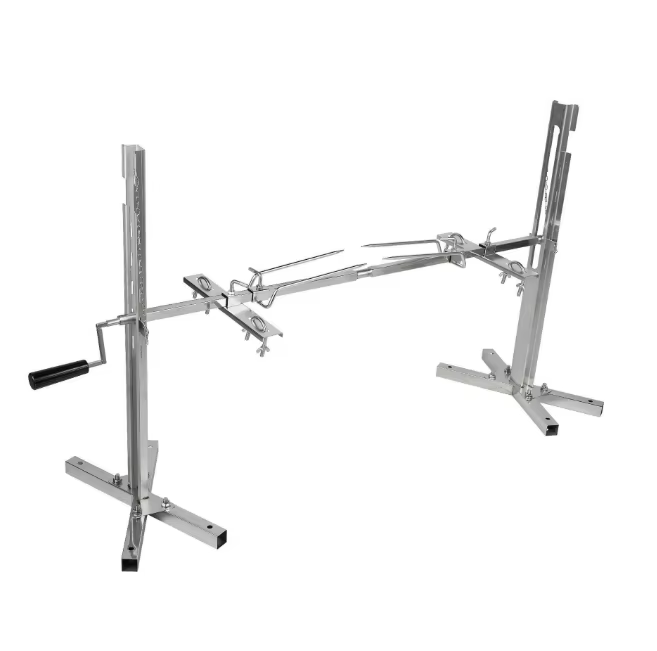
Measuring Partnership Maturity: KPIs That Reflect Mutual Growth and Resilience
Moving beyond transactional metrics requires BBQ Spit Roaster suppliers and distributors to adopt KPIs that quantify partnership health across three dimensions: shared growth, operational resilience, and customer-centric value. Traditional sales volume tracking fails to capture strategic alignment—instead, mature partnerships measure:
- Revenue Share Growth: Year-over-year expansion of joint revenue streams (e.g., accessories, service contracts)
- Market Expansion Rate: New geographic or segment penetration enabled by collaborative resources
- Net Promoter Score (NPS): End-customer loyalty attributed to the partnership—industry leaders consistently report scores above 30
- Refurbishment/Upcycle Rate: Sustainability and lifecycle value—top partnerships achieve 60–70% recertification rates
| KPI Category | Growth Metrics | Resilience Metrics | Mutual Benefit |
|---|---|---|---|
| Revenue Focus | Revenue share growth | Service contract renewal | Shared profitability |
| Market Impact | Expansion rate | Co-branded NPS | Joint brand equity |
| Operational Health | Innovation adoption % | Uptime/downtime ratio | Reduced operational risk |
As outlined in strategic alliance frameworks, successful partnerships tie 50–70% of incentive structures to these mutual KPIs—shifting accountability from short-term orders to long-term ecosystem strength. Quarterly reviews ensure metrics remain responsive to evolving goals, transforming static contracts into living growth engines.
Table of Contents
- Shifting from Transactional Sales to Strategic Alignment with Distributors
- Establishing Trust Through Operational Transparency and Shared Accountability
- Co-Creating Value via Collaborative Innovation and Lifecycle Partnership Models
- Measuring Partnership Maturity: KPIs That Reflect Mutual Growth and Resilience