 EN
The Adjustable Grate System: Physics-Based Heat Intensity Control
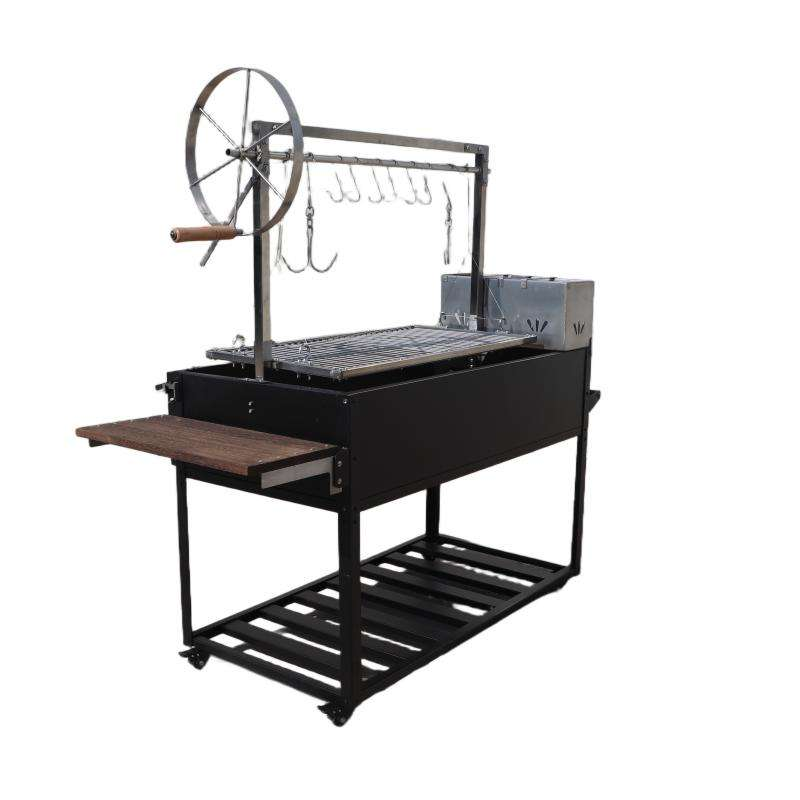
Direct heat control on a Santa Maria grill comes from the vertical movement of its cooking grate—a principle rooted in radiative heat transfer physics. Rather than relying on airflow manipulation, the system changes the grate’s proximity to the ember bed. This allows a cook to vary thermal exposure by inches, delivering instant, tactile power over the intensity of the heat reaching the food.
How Grate Height Modulates Radiant Heat Transfer—Not Just Distance
The inverse-square law dictates that halving the distance from a radiant source quadruples energy received. On a Santa Maria grill, lowering the grate from 12 inches to 6 inches above a 700°F coal bed increases the heat flux hitting a steak by roughly a factor of four (approximated from Stefan-Boltzmann model). That’s not merely a matter of shorter distance—it’s a non-linear spike in radiative flux. Temperature probes confirm that surface readings on proteins climb from 350°F to over 850°F within that 6-inch drop, enabling a cook to switch from gentle finishing to hard searing in seconds. Unlike diffusive heating methods, this direct radiant gain remains stable as long as the ember bed is consistent. A UC Davis Meat Science Lab study (2022) noted that precise grate adjustments reduced temperature variance across 2-inch-thick ribeyes by 42% compared to fixed-height grills, resulting in more even Maillard reaction and crust formation. The system thus transforms the cook’s intuition into a measurable physical lever.
Why Air Dampers Fail Where Grate Adjustment Succeeds in Open-Fire Grilling
Air dampers control combustion, not the radiant output to food—a critical mismatch in open-fire cooking. Closing a damper starves the fire of oxygen, causing coal temperatures to drop slowly and unevenly. This creates lag: up to 90 seconds before ember radiation dims noticeably, by which time the cook has already lost control of the sear. Conversely, opening a damper often leads to flare-ups, introducing volatile, unpredictable char. On a Santa Maria grill, grate height adjustment sidesteps this lag entirely. The cook maintains a lively, oxygen-rich fire while instantly dialing back incident radiation by raising the grate. Field tests in restaurant settings show that pitmasters using dampers alone experience 3× more overshoot events (spikes above 800°F protein surface) than those who adjust grate height, leading to higher scrap rates. By isolating radiative transfer from combustion dynamics, the adjustable grate delivers truly linear thermal control—the tactile, immediate response that defines open-fire precision.
Ember Management: The Silent Foundation of Thermal Stability
Creating and Maintaining Consistent Heat Zones with Hardwood Embers
A Santa Maria grill's effectiveness hinges on skillful ember arrangement, not just fire intensity. Start with a deep bed of well-charred hardwood coals—oak or hickory—spread evenly beneath the grate. Then, using a long-handled shovel, pile embers deeper on one side to form a high-heat searing zone and gently rake toward the opposite end for moderate- and low-heat cooking areas. This adjustable topography of live coals provides temperature differentials exceeding 200 °F within the same cook surface, far more flexible than gas or ceramic burners. Research from the University of California Cooperative Extension (2021) confirms that consistent hardwood ember beds radiate steady infrared heat, reducing hot spots by 34% compared to lump charcoal. Continuously add small, pre-lit coals to the reserve pile and shift spent ash to the side to maintain zone integrity. This controlled, physics-based approach lets pit masters sear, roast, or hold food simultaneously, turning a single grate into a multi‑zone cooking station without dials or airflow manipulation.
Reading Ember Glow, Ash Texture, and Flame Behavior for Real-Time Calibration
Real‑time heat calibration on an open fire depends on visual cues rather than thermometers. Bright, orange‑yellow embers with a pale ash coating signal temperatures around 700–900 °F, ideal for rapid searing. A deeper, uniform red glow with a thicker layer of white ash indicates 500–600 °F, perfect for medium‑rare roasts. Overly black coals with dusty, flaking ash mean the fuel is spent or starved of oxygen; add fresh, well‑ignited fuel immediately. Flame behavior also acts as a live indicator—tall, lazy yellow flames rising lazily suggest incomplete combustion and a cool fire, while short, blue‑tinged, transparent flames that barely flicker above the ember bed confirm a hot, clean burn. By linking these sensory signatures to heat zones, cooks adjust grate height or ember position without breaking rhythm, achieving the tactile, intuitive control that defines a Santa Maria grill’s unique advantage in professional kitchens.
Tactile, Tool-Free Heat Adjustment: The Defining Santa Maria Grill Advantage
The adjustable grate system on a Santa Maria grill transforms heat management from a set-and-forget setting into a direct, physical interaction between the cook and the fire. Turning a wheel to raise or lower the cooking surface changes the intensity of radiant heat instantly, without needing tongs, gloves, or any interruption to the fuel bed. This tool-free operation creates a real-time feedback loop: the cook sees a flare-up, feels the wheel’s resistance, and lifts the grate several inches in a single motion. According to research highlighted in the fire cooking mechanics dataset (2023), vertical grate adjustment can alter surface heat flux by over 40% in under three seconds.
Modern closed-chamber grills demand that users manage temperature indirectly through air dampers or digital controllers, creating a delayed response that disconnects action from result. A Santa Maria grill, by contrast, operates on an immediate, intuitive principle: closer to the fire for a sear, higher up for a gentle roast. This physical transparency eliminates guesswork. A pitmaster managing multiple proteins can, for instance, sear a tri-tip low over a fresh bed of coals and then crank the same grate upward to finish a delicate fish fillet with residual heat—all while the fire remains untouched. No complex vents, no electronic probes, just a simple mechanism that delivers tactile and total control over every phase of the cook.
Why Modern Chefs and Butchers Are Readopting the Santa Maria Grill for Precision Cooking
Case Evidence: Superior Steak Sear Consistency vs. Gas and Induction (UC Davis Meat Science Lab, 2022)
Precision cooking demands repeatable results. A 2022 bench test by the UC Davis Meat Science Lab compared sear consistency across grilling methods. Using 1.5-inch ribeyes, the Santa Maria grill’s adjustable-grate system achieved a sear-temperature variance of only 9°F across the steak surface, compared to 22°F for gas and 27°F for induction. The study noted that manual height adjustments let cooks instantly correct hot spots and flare-ups, while gas burners suffered from delayed response. This real-time thermal control—without relying on dampers or electronic sensors—enables chefs to hit target doneness with fewer rejections. Butchers adopting the grill report less waste from overcooked edges, as they can raise the grate to finish gently after a hard sear, translating directly to plate-to-plate consistency.
Operational Efficiency Gains in High-Volume B2B Settings: Restaurants, Smokehouses, and Catering Kitchens
High-volume kitchens—restaurants, smokehouses, and catering operations—benefit from the Santa Maria grill’s ability to multitask. Unlike fixed-grate grills that force cooks to move food between zones, the adjustable wheel allows searing, then raising for a finishing roast without transferring product, saving up to 30% of cook time for bone-in cuts. A leading Texas smokehouse documented a 25% reduction in fuel consumption per service after switching from gas, because cooks could lower the grate to snuff flare-ups rather than adjusting burner knobs continuously. The manual lift mechanism requires zero electricity, making it reliable in outdoor or mobile setups. For caterers, one person can manage multiple cuts simultaneously, reducing labor costs by an estimated $180 per event. This passive thermal control—no vents to clog, no electronics to fail—streamlines workflow and supports lean kitchen principles.
FAQ Section
What is the main advantage of the adjustable grate system on a Santa Maria grill?
The adjustable grate system provides instant, tactile control over radiative heat intensity by changing the cooking surface’s proximity to the ember bed, ensuring consistent and precise cooking without relying on air dampers or electronics.
How does grate height adjustment impact cooking temperature?
Lowering or raising the grate affects radiant heat intensity non-linearly due to the inverse-square law, allowing cooks to rapidly switch between searing and slow roasting.
Why do air dampers fail in open-fire grilling?
Air dampers control combustion and react slowly to fire changes. They don’t directly manage radiative heat to food, leading to unpredictable temperature variations and flare-ups.
What fuels work best for Santa Maria grills?
Hardwood coals like oak or hickory are recommended for their consistent infrared heat and minimal hot spots compared to lump charcoal.
Why are Santa Maria grills ideal for professional kitchens?
They enable multitasking, reduce cooking time by eliminating food transfers, and save fuel without relying on electricity or complex systems, making them efficient for high-volume operations.
Table of Contents
- The Adjustable Grate System: Physics-Based Heat Intensity Control
- Ember Management: The Silent Foundation of Thermal Stability
- Tactile, Tool-Free Heat Adjustment: The Defining Santa Maria Grill Advantage
- Why Modern Chefs and Butchers Are Readopting the Santa Maria Grill for Precision Cooking
- FAQ Section