
 EN
EN
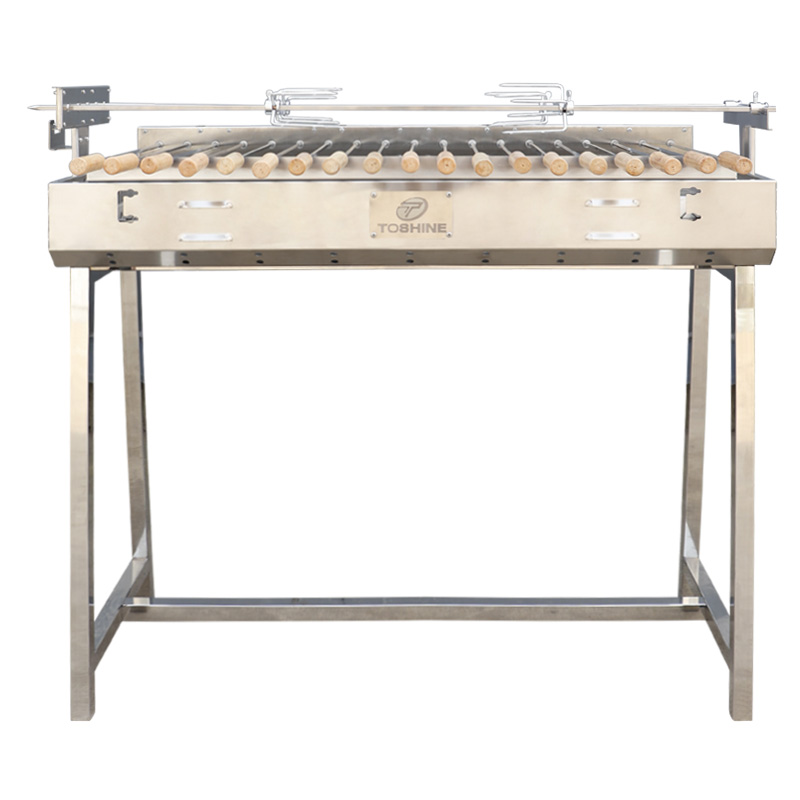
Significant Cost Savings Through Direct Sourcing of BBQ Spit Roasters
Eliminating Middlemen: How Cutting Distributors Lowers Unit Cost Without Compromising Quality
Direct factory procurement eliminates the multi-tier distributor markup—typically 20–30%—that inflates BBQ spit roaster costs without adding value. Large-scale retailers negotiating directly with manufacturers secure per-unit pricing unattainable through intermediaries. A 2023 supply chain analysis confirms this model reduces procurement costs by an average of 25%, with no compromise on quality: production standards, materials, and testing protocols remain identical. Factories often offer tiered volume pricing, and direct communication ensures precise adherence to design specs—from motor torque to finish tolerances. These savings empower retailers to invest in competitive pricing, marketing, or inventory expansion—strengthening market position while preserving the reliability customers expect from premium outdoor cooking equipment.
True Total Cost of Ownership: Logistics, Compliance, and In-House QC vs. Markup-Driven 'Convenience'
The convenience of distributor-sourced BBQ spit roasters masks inflated total landed costs. Bundled logistics, compliance, and quality control services often add 15–25% to the final price—with minimal transparency or accountability. By managing freight forwarding, optimizing shipping routes, and handling customs clearance in-house, retailers typically reduce logistics expenditure by 15% compared to intermediary-managed solutions (2023). While in-house quality control requires upfront investment, it dramatically lowers defect rates and costly returns—savings that offset QC overhead. Taking ownership of compliance and inspection also avoids hidden fees and the risk of substandard goods common in hands-off, markup-driven models. The result is a demonstrably lower true total cost of ownership—and greater control across the entire value chain, from factory floor to final delivery.
Scalable Procurement: Aligning MOQs, Forecasting, and Infrastructure with BBQ Spit Roaster Demand
Direct factory sourcing transforms procurement into a scalable engine—but only when Minimum Order Quantities (MOQs) reflect real demand. As seasonal, bulky products, BBQ spit roasters require precise forecasting. Typical MOQs for mid-range models range from 200 to 500 units, shaped by production economics. Retailers must leverage historical sales data, market trends, and promotional calendars to commit to volumes that prevent both stockouts and overstock. Tools tracking sell-through rates and seasonal demand spikes help convert MOQ commitments into phased, manageable orders.
Infrastructure underpins scalability. Warehousing capacity, handling equipment, and distribution networks must support large, consolidated shipments—unlike drop-shipping models. Direct procurement demands in-house control over storage and fulfillment, making investments in scalable racking systems and demand-planning software essential to reduce carrying costs and improve order accuracy. Flexible agreements—such as blanket purchase orders with staggered deliveries—further ease cash flow and adapt to shifting demand. This collaborative approach turns MOQ constraints into a strategic lever for negotiating better unit pricing while keeping inventory lean and responsive.
Full Customization and OEM Control for BBQ Spit Roasters
Branded Design, Feature Integration, and Specification Precision Only Possible with Factory Collaboration
Direct factory engagement unlocks customization impossible through distributors. Working with an OEM partner gives retailers full control over critical specifications: motor torque and rotation speed, spit rod material and finish, load capacity, and thermal efficiency. This precision ensures alignment with brand standards and target customer expectations. For instance, a factory can deliver heavy-duty 304 stainless steel construction, a 35 kg load capacity, and a quiet, energy-efficient motor—all while embedding custom branding and color schemes. Feature integration like smart temperature probes or adjustable height settings becomes feasible only when manufacturing is built around a retailer’s unique brief. A 2023 survey of large-scale importers found that 78% of brands using factory-direct OEM reported higher customer satisfaction due to exact specification alignment. Iterative prototyping—enabled by direct feedback loops—also reduces design flaws early, saving months of rework and ensuring functional, market-ready products.
Case Study: A U.S. Home Goods Retailer Accelerated Time-to-Market by 37% via Co-Developed BBQ Spit Roaster Line
A major U.S. home goods retailer launched a premium BBQ spit roaster line ahead of summer grilling season by partnering directly with a factory’s ODM team—bypassing intermediaries entirely. The co-developed unit featured a 50 kg capacity, quiet DC motor, and distinctive branded aesthetic. Leveraging the factory’s in-house design, tooling, and rapid mold fabrication capabilities, the development cycle shrank from the industry-standard 10 months to just 6.3 months—a 37% acceleration. Parallel prototyping and seamless communication eliminated middleman delays. The retailer launched in early May, capturing peak seasonal demand and achieving a 22% year-over-year sales increase in the outdoor cooking category—demonstrating how factory collaboration converts custom vision into timely market advantage.
Managing Supply Chain Realities: Lead Times, Logistics, and Risk Mitigation for BBQ Spit Roasters
Strategic Planning for Port Delays, Incoterms Mastery, and Customs Clearance Without Distributor Intermediaries
Direct sourcing from China removes distributor markups but transfers logistics responsibility to your team. Port congestion—delaying 35% of Asia-bound shipments by over a week, per a 2023 logistics report—demands proactive planning: buffer stock, flexible shipping windows, and contingency routing. Mastery of Incoterms is critical: choosing FOB (Free On Board), for example, shifts insurance and freight responsibility to the buyer after loading, enabling carrier selection control and potential cost savings. Customs clearance without intermediaries requires either a dedicated internal expert or a trusted broker to navigate harmonized tariff codes, duty drawbacks, and documentation requirements. Companies optimizing this process reduce landed costs by up to 15% versus distributor-managed logistics, according to 2024 benchmarks. Pre-clearing documentation and cultivating relationships with port authorities further reduce dwell times. With these measures, large-scale retailers maintain 98% on-time delivery rates—even during peak season.
FAQ
What are the main benefits of direct factory sourcing for BBQ spit roasters?
Direct factory sourcing offers significant cost savings (up to 25%), full customization options, and better control over quality while removing distributor markups and associated inflated costs.
How can retailers manage logistics effectively with direct sourcing?
Retailers can manage logistics by planning for contingencies like port delays, mastering Incoterms, and engaging in-house or expert support for customs clearance, reducing landed freight costs.
What is the importance of Minimum Order Quantities (MOQs) in direct sourcing?
MOQs help balance inventory levels, enabling retailers to prevent stockouts and overstock while negotiating better unit pricing and maintaining scalability.
Can customization be achieved through direct sourcing?
Yes, direct sourcing with OEM partners allows retailers full control over product specifications, branding, and feature integration, ensuring products align perfectly with customer needs and brand identity.
How does direct sourcing improve time-to-market?
By eliminating middleman delays, direct sourcing with factory collaboration accelerates product development timelines, allowing retailers to capitalize on peak seasonal demand.
Table of Contents
- Significant Cost Savings Through Direct Sourcing of BBQ Spit Roasters
- Scalable Procurement: Aligning MOQs, Forecasting, and Infrastructure with BBQ Spit Roaster Demand
- Full Customization and OEM Control for BBQ Spit Roasters
- Managing Supply Chain Realities: Lead Times, Logistics, and Risk Mitigation for BBQ Spit Roasters
-
FAQ
- What are the main benefits of direct factory sourcing for BBQ spit roasters?
- How can retailers manage logistics effectively with direct sourcing?
- What is the importance of Minimum Order Quantities (MOQs) in direct sourcing?
- Can customization be achieved through direct sourcing?
- How does direct sourcing improve time-to-market?