
 EN
EN
Why Commercial Kitchens Are Switching to Stainless Steel BBQ Grills in 2026
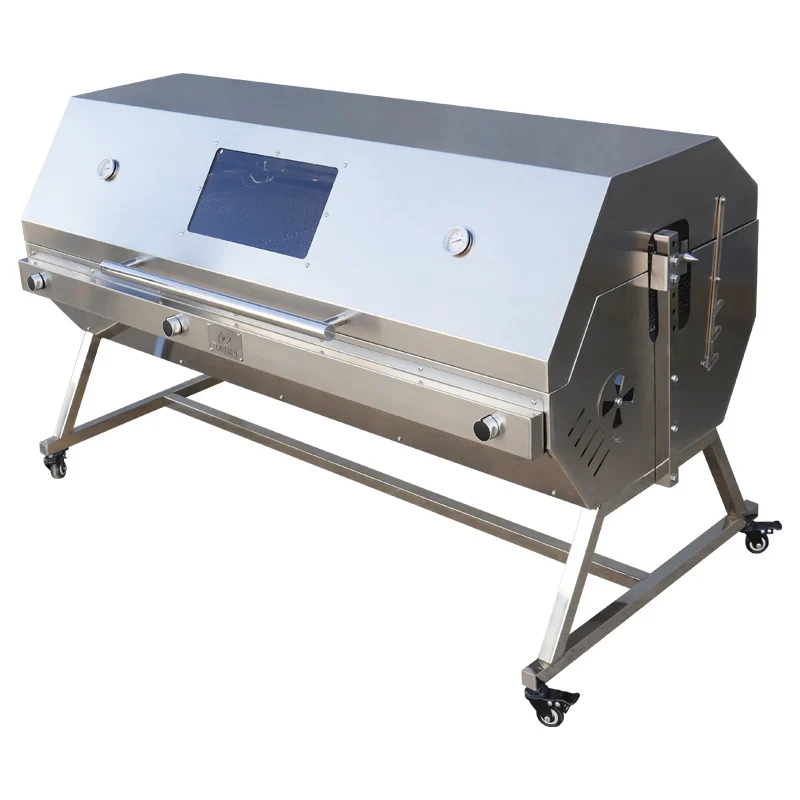
Walk through the back-of-house at any modern steakhouse, resort, or high-volume catering operation and one thing stands out: the grills are stainless steel. Not painted. Not powder-coated. Not porcelain enamel over rust-prone carbon steel. Just brushed, industrial-grade, food-safe stainless steel that looks as good after 500 services as it did on day one.
This is not a trend driven by aesthetics. It is a calculated business decision driven by fire codes, health department inspections, and a simple piece of math that every restaurant owner eventually learns: a cheap grill costs more.
Here is why commercial kitchens are making the switch — and why the ones that have not, will.
The Real Problem With Painted and Coated Grills in Commercial Use
A painted steel grill might survive three years on a suburban patio, used once a week for burgers. In a commercial kitchen doing 80-150 covers a night, that same grill is dead within 12 months. Here is what actually happens:
1. Thermal Cycling Destroys Coatings
A restaurant grill goes from cold to 600°F and back down, every single day, sometimes twice a day for lunch and dinner service. That repeated expansion and contraction creates microscopic cracks in paint and powder coating. Moisture seeps in. Rust starts from the inside out. Within months, the coating blisters near the firebox, exposing bare steel that rusts within a week.
Stainless steel — particularly 304 grade — does not have this problem. There is no coating to fail because the material itself is rust-resistant all the way through. Scratch it, heat it, cool it, leave it in the rain — the chromium oxide passive layer self-repairs.
2. Health Inspectors Notice
In most jurisdictions, commercial kitchen equipment must meet NSF or equivalent food safety standards. One of the first things an inspector checks: is there rust on food-contact surfaces? Rust harbors bacteria and cannot be sanitized effectively. A restaurant with rusted grill grates or body panels risks a citation, a negative score, or — in worst cases — a temporary closure.
304 stainless steel grates are non-porous, non-reactive, and meet FDA and NSF requirements for food contact surfaces. They can be pressure-washed, steam-cleaned, or scrubbed with commercial-grade degreasers without degradation. For a busy kitchen, that means faster end-of-night cleaning and fewer inspection headaches.
3. Replacement Costs Add Up Faster Than You Think
A 333 per year. A 200 per year — and performs better the entire time.
Now multiply that across a restaurant group with five locations. Or a hotel chain with 20 properties. The math becomes impossible to ignore.
What 304 Stainless Steel Actually Means for a Commercial Kitchen
Not all "stainless steel" is the same. Here is what grade 304 brings to a commercial environment:
Corrosion Resistance That Handles Everything
304 stainless steel contains 18% chromium and 8% nickel. The chromium forms a microscopic oxide layer that blocks oxygen from reaching the iron in the steel. This layer is self-healing — scratch it with a metal spatula, and it reforms within hours.
In practical terms: salt spray from marinated meats, acidic tomato-based sauces, high-humidity dishwasher environments, outdoor coastal locations — 304 handles all of it. 430 stainless or 201 stainless cannot match this performance, which is why reputable commercial equipment manufacturers specify 304 for all food-contact surfaces.
Heat Performance That Saves Fuel
Stainless steel reflects radiant heat more efficiently than painted surfaces. In a commercial kitchen, that translates to faster preheat times, more even cooking temperatures, and — critically — lower fuel consumption. A 10-15% reduction in charcoal or gas usage per service might not sound dramatic, but over 300 operating days per year, it adds up to real savings.
The Hygiene Factor
304 stainless steel is the standard material for surgical instruments and food processing equipment for one reason: it can be made sterile. The surface has no pores, no micro-crevices where bacteria can hide, and no coating that degrades under repeated sanitization. When a health inspector walks through, a stainless steel kitchen sends an unambiguous signal: this operation takes food safety seriously.
Why Now? The Market Dynamics Driving the Shift
Australia and Europe Are Leading the Charge
In Australia, commercial outdoor cooking is a year-round industry. Beachside cafes, pub beer gardens, and event catering companies expose their equipment to salt air, UV radiation, and heavy daily use. Painted grills simply do not survive. More Australian hospitality groups are now specifying 304 stainless steel as a minimum requirement in their equipment RFPs.
In the European Union, tightening food-contact material regulations and durability standards are pushing painted and coated grills out of the commercial market. CE-certified stainless steel equipment has become the compliance default.
Restaurants Are Thinking in Decades, Not Years
Post-pandemic, the hospitality industry has shifted toward capital expenditure that pays off over 10-15 years rather than chasing the lowest upfront price. Labor shortages mean less time for equipment maintenance. Stainless steel fits both priorities: it lasts longer and requires less work.
Factory-Direct Sourcing Has Closed the Price Gap
Five years ago, a commercial-grade 304 stainless steel grill cost 4-5x a painted alternative. Today, direct-from-manufacturer sourcing — especially from factories with their own CNC and stainless steel fabrication lines — has brought the premium down to 2-3x, with the gap continuing to narrow. When you factor in the replacement cost of painted grills, stainless steel is already cheaper over any reasonable time horizon.
What to Look for When Sourcing Stainless Steel Commercial Grills
If you are a restaurant group, hotel procurement manager, or BBQ brand sourcing for resale, here are the questions to ask your manufacturer:
- What grade of stainless steel is used for the grates, firebox, and body? The answer should be 304 for all food-contact surfaces. Accept nothing less.
- What is the steel thickness? Commercial-grade fireboxes should be 2mm minimum, with 3mm+ for high-volume operations.
- Can you provide mill certificates? A legitimate manufacturer can trace every batch of steel back to the mill and verify the grade.
- What certifications does the grill hold? CE, RoHS, and FDA are the baseline. NSF or equivalent food safety certification adds another layer of confidence.
- Do you offer OEM customization? The best manufacturers can adjust dimensions, add your logo via laser engraving, and customize packaging — so the grill arrives ready for your kitchen or your retail shelf.
Conclusion
The shift from painted steel to 304 stainless steel in commercial kitchens is not a passing trend. It is the natural outcome of better economics, stricter food safety standards, and a hospitality industry that has learned the hard way that cheap equipment is a false economy.
For restaurant owners, the calculation is simple: spend more once, or spend less repeatedly. For BBQ brands and distributors, the opportunity is clear: the market is moving, and the customers your buyers serve are already demanding stainless steel.
Toshine manufactures commercial-grade 304 stainless steel BBQ grills for restaurants, hotels, catering businesses, and BBQ brands worldwide. All food-contact surfaces — grates, spit rods, inner liners — are 100% 304 stainless steel, produced in our own CNC-equipped facility in Liaoning, China. Contact us to discuss OEM specifications, bulk pricing, and factory-direct shipping.