
 EN
EN
What Is a Santa Maria Grill? Origins, Design, and Core Cooking Philosophy
Adjustable Iron Grill Grates and Live-Oak–Fueled Direct Fire
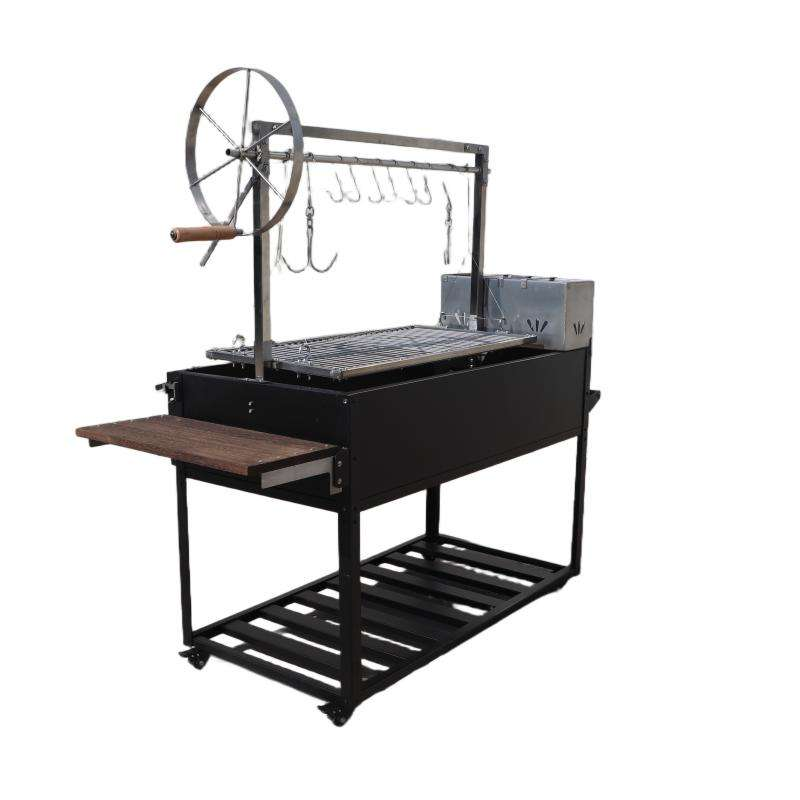
Born on California’s Central Coast ranches in the mid-1800s, the Santa Maria grill emerged as a pragmatic solution for cooking large beef cuts over unpredictable live fire. Spanish vaqueros engineered its signature hand-crank pulley system to raise or lower heavy iron grates with precision—enabling direct exposure to intense live-oak flames for crust formation, then gradual retreat for controlled cooking. Unlike static grills, this adjustable height accommodates natural heat fluctuations from burning logs. Central Coast live oak—denser and cleaner-burning than standard charcoal—is the traditional fuel, delivering higher BTUs and a distinct, slightly sweet smoke profile. The design centers on fire mastery: cooks manipulate proximity to flame rather than airflow or gas valves. This tactile control yields bold wood-smoke infusion, precise caramelization, and reliable results with thick, dense cuts.
Tri-Tip as the Defining Cut—and Why It Demands the Santa Maria Grill
The triangular tri-tip—cut from the bottom sirloin—became inseparable from Santa Maria grilling due to its structural asymmetry: weighing 1.5–2.5 pounds with sharply tapered ends and a thicker center. On fixed-height grills, it risks charring at the tips while undercooking centrally. The Santa Maria’s adjustable grate solves this in two deliberate stages:
- Sear phase: Grate lowered near oak flames (500–600°F) creates a deep, even crust in 5–7 minutes
- Slow finish: Raised to 12–18 inches reduces radiant intensity to 225–250°F, allowing gentle convection to penetrate without flare-ups
This method renders intramuscular fat evenly, preserves moisture, and exposes the entire surface to unimpeded smoke—unlike lidded cookers that trap steam. Tri-tip’s coarse grain absorbs live-oak smoke readily, producing the regional hallmark: a rosy, tender interior beneath a crisp, well-defined crust with visible smoke ring penetration. No other cut so fully leverages the grill’s dynamic height control for textural and flavor optimization.
Traditional Argentine Parrilla: Embers, Ritual, and Functional Constraints
Fixed-Height Steel Parrilla Over Low, Radiant Wood Embers
The traditional Argentine parrilla features a fixed-height steel grate suspended over smoldering wood embers—typically quebracho or mesquite. Its design prioritizes low, radiant, indirect heat for slow, even cooking. Fat renders gradually, collagen breaks down gently, and moisture remains locked in. Because the grate height is static, temperature control depends entirely on ember management: pitmasters bank, rake, and redistribute coals to create subtle hot and cool zones. While ideal for large, fatty cuts like asado de tira (short ribs) or whole lamb shoulders, the parrilla lacks the rapid searing capacity needed for thinner steaks or high-heat crust development.
Gaucho-Inspired Asado Workflow vs. Modern Service Demands
The parrilla’s workflow reflects centuries-old gaucho tradition: meat is arranged by cooking time across a single ember bed—slower items like vacío (flank) go on first; quicker ones like chorizo follow later. This ritualistic pacing honors heritage but introduces operational friction in modern service environments. A single parrilla typically handles 15–20 servings per hour—well below the throughput demands of a high-volume steakhouse. Staff must master nuanced fire-tending techniques—including mid-service ember raking and ash removal—skills requiring 6–12 months of hands-on mentorship. For operations targeting 50+ covers nightly, scaling requires either multiple stations or significant labor investment.
Santa Maria Grill vs. Parrilla: Key Operational Differences for Steakhouses
Heat Control, Cut Versatility, and Consistency at Scale
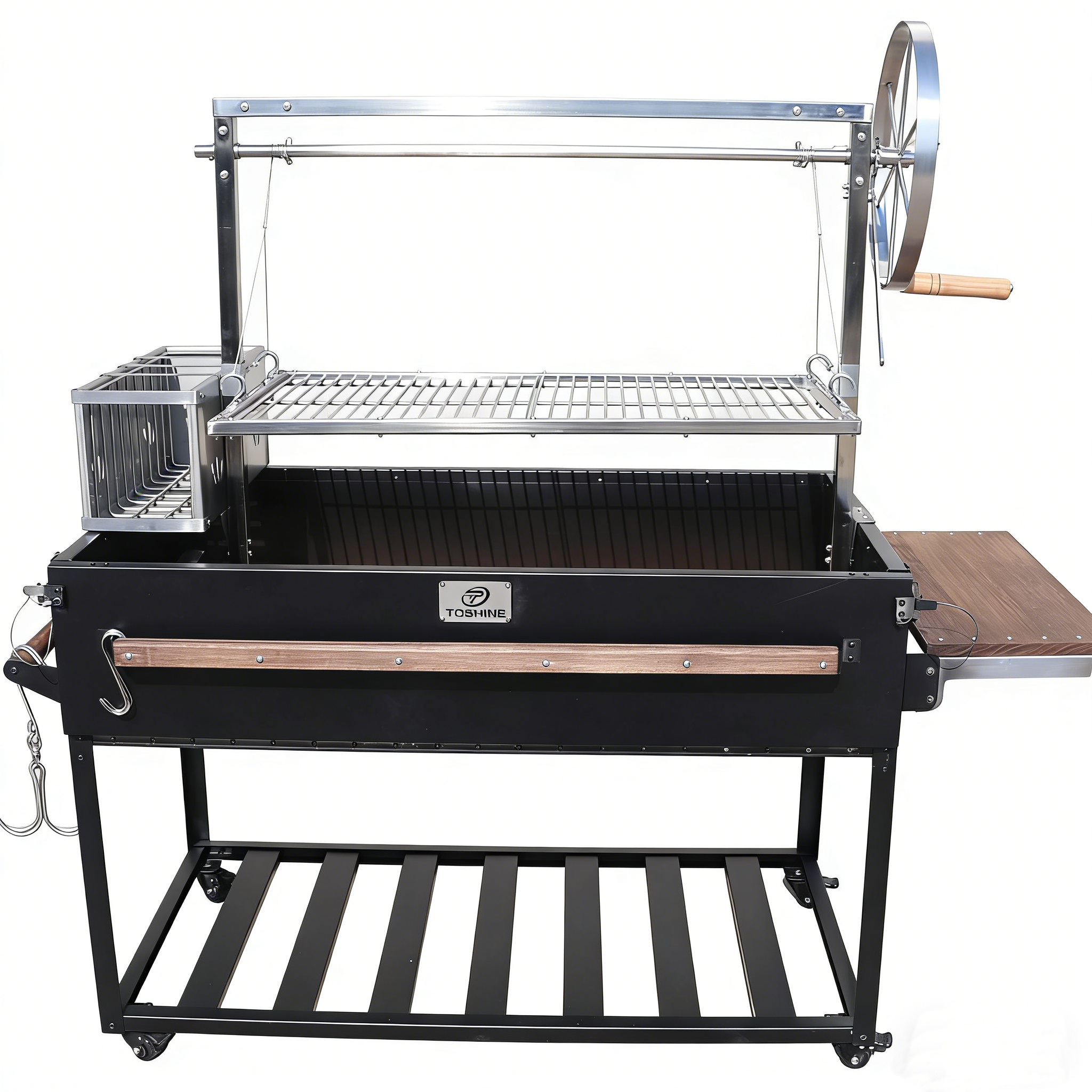
Santa Maria grills use crank-operated adjustable grates to precisely modulate proximity to live-oak flames—ideal for achieving repeatable sear on thick cuts like tri-tip or ribeye while managing diverse proteins during rush hours. In contrast, traditional parrillas rely on fixed-height V-grates and manual ember redistribution, excelling with slow-cooked, fatty cuts but lacking agility for rapid temperature shifts. This distinction directly affects consistency and throughput: Santa Maria achieves 18–22 uniformly seared steaks per hour; parrilla workflows average 12–15 per hour (Journal of Culinary Engineering, 2025).
| Operational Factor | Santa Maria Grill | Traditional Parrilla |
|---|---|---|
| Heat Adjustment | Instant (crank mechanism) | Manual ember redistribution |
| Prime Cut Compatibility | Thick steaks, vegetables | Fatty ribs, whole cuts |
| Peak Service Consistency | High (direct flame control) | Moderate (skill-dependent) |
Durability, Throughput, and Staff Training Requirements
Both grill types are built for commercial durability—typically using heavy-gauge stainless steel—but Santa Maria’s simplified mechanical system lowers long-term maintenance costs by 30% compared to the parrilla’s more intricate V-grate and ember-handling components (Foodservice Equipment Report, 2024). Throughput diverges significantly: Santa Maria’s direct-flame approach supports efficient, high-volume service—50+ covers per hour—while the parrilla’s slower ember-roasting suits premium banquet or tasting-menu formats. Training requirements reflect this divide: mastering parrilla ember dynamics demands 40+ hours of dedicated practice, whereas Santa Maria operations can be standardized in under 10 hours using intuitive visual cues—grate height relative to flame intensity.
Strategic Recommendation: When to Choose (or Hybridize) the Santa Maria Grill
For steakhouses prioritizing high-heat searing, menu flexibility, and consistent high-volume output, the Santa Maria Grill offers compelling advantages. Its adjustable grates deliver precise flame control for signature cuts like tri-tip while seamlessly accommodating steaks, chops, seafood, and vegetables—all on one platform. That versatility makes it especially valuable in fast-paced, multi-protein service models.
That said, establishments rooted in traditional Argentine asado—or those building a menu around deeply rendered, slow-cooked whole cuts—may find the fixed-height parrilla better aligned with their culinary identity and guest expectations.
Hybrid solutions now bridge this gap: leading manufacturers offer integrated systems combining Santa Maria’s vertical adjustment with Argentine-style V-grates and dedicated braseros (ember beds). These platforms support both direct-flame grilling and indirect ember roasting on a single unit—optimizing kitchen footprint, simplifying staff training, and expanding menu range without sacrificing authenticity. Consider hybridization when upgrading aging equipment, expanding into dual-concept menus, or scaling beyond 200 covers nightly.
Table of Contents
- What Is a Santa Maria Grill? Origins, Design, and Core Cooking Philosophy
- Traditional Argentine Parrilla: Embers, Ritual, and Functional Constraints
- Santa Maria Grill vs. Parrilla: Key Operational Differences for Steakhouses
- Strategic Recommendation: When to Choose (or Hybridize) the Santa Maria Grill