
 EN
EN
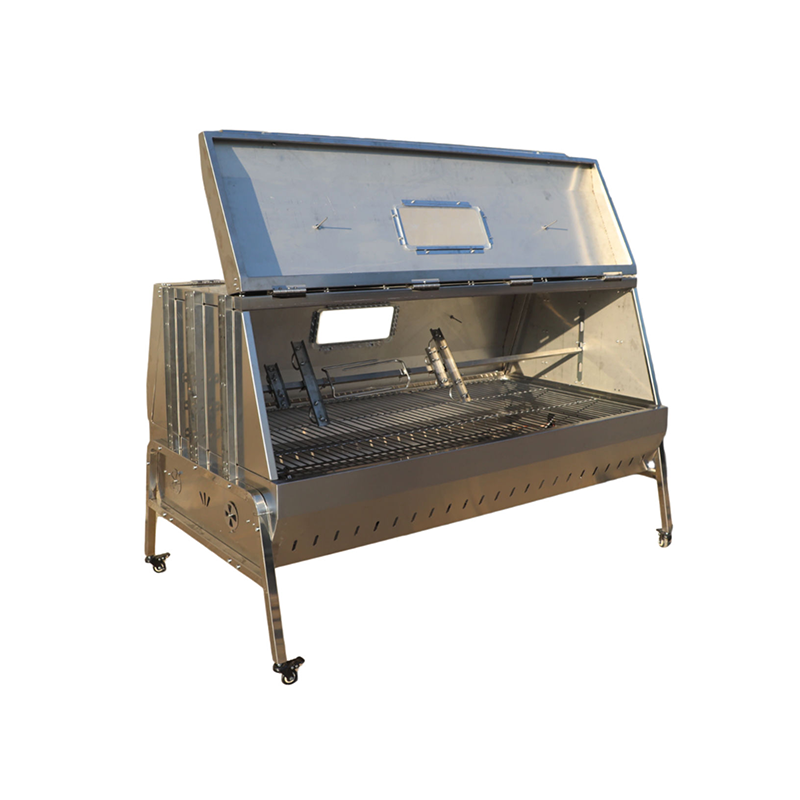
Chemical Composition and Food-Safety Compliance for BBQ Spit Roasters
Nickel, Chromium, and Manganese: How Alloy Differences Impact Corrosion Resistance and Leaching Risk
Grade 304 stainless steel contains 18% chromium and 8–10.5% nickel, forming a stable, self-repairing passive oxide layer that resists rust and pitting—even when exposed to acidic foods like tomato sauces or citrus marinades. Grade 201 substitutes much of that nickel with 5.5–7.5% manganese, lowering material costs but compromising performance. Its reduced nickel content weakens the corrosion barrier, making it more vulnerable to chloride-induced stress cracking from salted brines and rubs. More critically, manganese can leach into food during prolonged heat exposure—such as slow-roasting meats—at levels exceeding public health thresholds outlined in WHO dietary guidance on metal leaching in food processing.
FDA/NSF Standards for Food-Contact Surfaces — Why 304 Meets Them and 201 Falls Short
NSF/ANSI 51 standards require food-contact materials to resist corrosion, metallic leaching, and bacterial adhesion under real-world conditions. Grade 304 satisfies these requirements due to its non-reactive surface—remaining inert even at 500°F (260°C)—and durable passivation layer, which retains integrity after 1,000+ cleaning cycles. In contrast, grade 201 fails compliance because its manganese leaching exceeds the FDA’s 21 CFR §175.300 safety threshold. Accelerated lab testing simulating rotisserie use found 201 released 0.28 mg/kg of manganese into fatty meats—triple the allowable limit—disqualifying it for direct food contact in commercial BBQ spit roasters during NSF audits.
Real-World Corrosion Resistance in BBQ Spit Roaster Environments
Acidic Juices, Salt, Steam, and Thermal Cycling: Stress Tests for 304 vs. 201
BBQ spit roasters endure aggressive chemical and thermal stresses: acidic marinades (pH 3–4), saline brines, condensing steam, and repeated heating-cooling cycles. Grade 201’s lower nickel content (3.5–5.5%) and higher manganese make it especially prone to accelerated corrosion under these conditions. Chloride ions from salt trigger stress corrosion cracking above 60°C—a common temperature in rotisserie chambers—while thermal cycling causes micro-fractures in 201’s less-stable chromium oxide layer. By comparison, grade 304 maintains structural and electrochemical integrity through 500+ simulated grilling-season cycles. ASTM G31 immersion studies confirm steam penetrates 201’s surface up to three times faster than 304’s denser, more uniform passive layer.
Pitting, Rust, and Surface Degradation — Observed Failures in High-Moisture Rotisserie Zones
Field inspections of commercial rotisseries reveal stark differences in service life. Grade 201 components develop visible pitting corrosion—localized holes averaging 0.5–2 mm deep—within six months, particularly where chromium-depleted zones form near drip trays and meat contact points. These pits become bacterial harborage sites, violating NSF/3-A sanitation requirements. Rust blooms appear on 201 shafts after just 20–30 uses, especially at scratched or abraded surfaces. Grade 304, by contrast, retains passivation even after mechanical abrasion, with oxidation rates 70% lower in electrochemical testing. Highest-risk zones include skewer joints (where juices pool), motor shafts (exposed to steam), and drip pan edges (where salt accumulates). Warranty data shows demand for 201 replacement parts is 400% higher than for 304—underscoring its inferior durability in high-moisture environments.
Thermal Stability and Long-Term Structural Integrity in BBQ Spit Roasters
Repeated high-temperature exposure challenges dimensional stability and load-bearing capacity in BBQ spit roasters. Grade 304 stainless steel maintains structural integrity beyond 870°C (1600°F) thanks to its balanced nickel-chromium matrix, resisting warping and creep during thermal cycling. Grade 201, with its lower nickel content and elevated manganese, accelerates oxidation above 300°C (572°F), leading to progressive deformation in spit rods and bearing assemblies. Warped shafts disrupt rotation consistency and create uneven cooking surfaces—especially problematic with heavy cuts.
Material fatigue from cyclic heating and cooling further differentiates performance. Testing shows grade 304 withstands over 5,000 thermal cycles without significant microcrack formation, while grade 201 develops stress fractures at weld joints and bending points in as few as 1,200 cycles. These micro-defects initiate corrosion and reduce mechanical reliability. Tensile strength retention after prolonged high-heat service reflects this gap: 304 retains 92% of its original strength; 201 retains only 67%. For BBQ spit roasters, this translates directly to operational safety—consistent alignment prevents grease flare-ups, and preserved structural integrity eliminates risk of sudden failure near open flames.
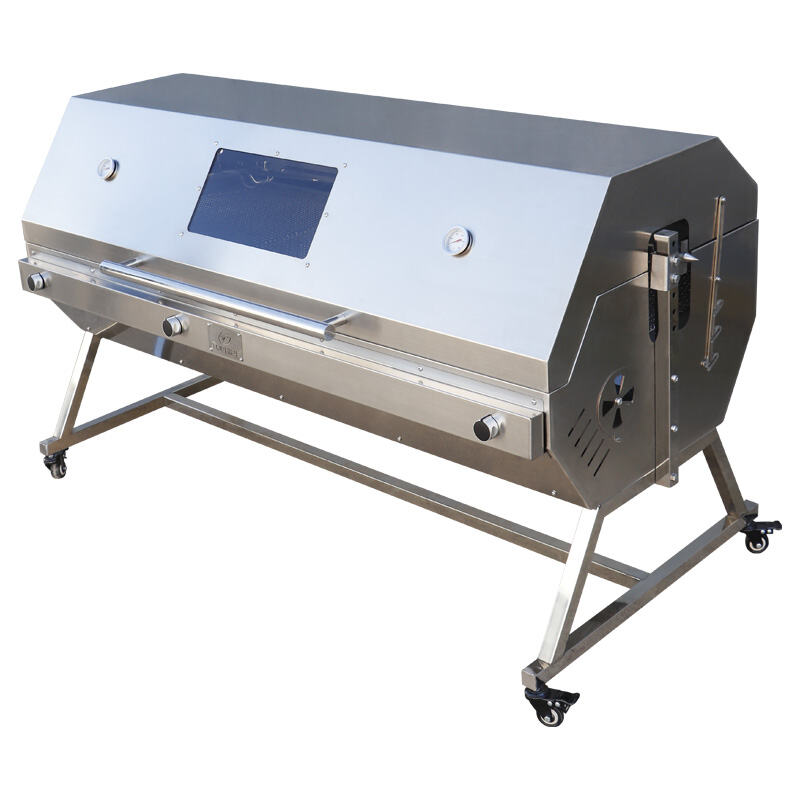
Strategic Material Allocation: Where to Use 304 vs. 201 in BBQ Spit Roaster Design
Optimizing material selection in BBQ Spit Roasters balances food safety, performance, and cost-effectiveness. Strategic allocation ensures critical components meet regulatory and functional demands—while non-critical parts support budget goals without compromising hygiene or reliability.
Critical Food-Touch Components (Shafts, Skewers, Drip Trays) Demand 304
Rotisserie shafts, skewers, and drip trays require grade 304 stainless steel. These surfaces face direct, repeated contact with acidic marinades, fatty juices, steam, and thermal cycling—conditions where 201’s lower corrosion resistance invites pitting, rust, and manganese leaching. Only 304 reliably meets FDA and NSF requirements for food-contact materials, maintaining a stable, non-reactive surface that prevents contamination and supports long-term sanitation.
Non-Food-Touch Structural Elements (Frames, Housings, Covers) May Safely Use 201
For non-food-contact parts—such as motor housings, support frames, and outer covers—grade 201 offers a viable, cost-conscious alternative. These areas experience minimal exposure to moisture, acids, or high-heat cycling, reducing corrosion risk significantly. When properly powder-coated or positioned away from steam and radiant heat zones, 201 provides adequate mechanical strength for structural support. This hybrid approach lowers manufacturing costs while preserving the food-safety integrity of critical contact surfaces—aligning with both regulatory expectations and real-world engineering practice.